


Burnout and depression share symptoms like exhaustion, low motivation, and trouble concentrating, but they are not the same. Burnout is tied to chronic work stress and usually improves when that stress changes. Depression affects every part of life, including activities you once enjoyed, and does not lift with time off.
What Is Burnout?
Burnout is a state of physical and emotional exhaustion caused by chronic workplace stress that has not been managed. The World Health Organization describes burnout as an occupational phenomenon, not a medical condition, defined by 3 dimensions, according to the World Health Organization:
- Feelings of energy depletion or exhaustion.
- Increased mental distance from your job, or cynicism about it.
- Reduced effectiveness at work.
Who Is Most at Risk of Burnout?
People in high-demand, low-control roles face the highest risk of burnout. 4 groups are especially vulnerable:
- Healthcare workers and first responders.
- Teachers and social workers.
- Caregivers who also hold full-time jobs.
- Entertainment and creative professionals with unpredictable schedules, a common pattern across Los Angeles.
What Is Depression?
Depression is a mental health condition that causes a persistent low mood or loss of interest lasting at least 2 weeks. An estimated 21.0 million U.S. adults, or 8.3% of all adults, had at least one major depressive episode in the past year, according to the National Institute of Mental Health.
Can Depression Look Like Burnout?
Depression can look like burnout, especially in people who keep functioning at work. High-functioning depression often hides behind productivity, which makes it easy to blame the job instead of the mood. A useful test is whether the heaviness follows you home, into weekends, and into the activities that used to recharge you.
What Are the Key Differences Between Burnout and Depression?
Burnout and depression differ in 5 practical ways:
- Source: burnout comes from work stress, while depression has many causes, including genetics, trauma, and life events.
- Scope: burnout centers on work, while depression affects relationships, hobbies, and self-worth.
- Time off: burnout often eases after a vacation, while depression usually stays the same.
- Enjoyment: people with burnout can still enjoy life outside work, while depression dulls pleasure everywhere.
- Self-view: burnout feels like “my job is draining me,” while depression often feels like “something is wrong with me.”

Can Burnout Turn Into Depression?
Burnout can turn into depression when chronic stress goes unaddressed for months. Ongoing exhaustion wears down sleep, relationships, and coping skills, which raises the risk of a depressive episode. Treating burnout early protects against that slide. The sooner you address the stress, the less ground you have to recover, and the more likely simple changes like better boundaries and rest will be enough.
What Are the Warning Signs Burnout Is Becoming Depression?
4 warning signs suggest burnout is becoming depression:
- Low mood continues on weekends and vacations.
- You lose interest in hobbies and people outside work.
- Feelings of guilt or worthlessness grow stronger.
- Sleep and appetite change for more than 2 weeks.

How Is Each One Treated?
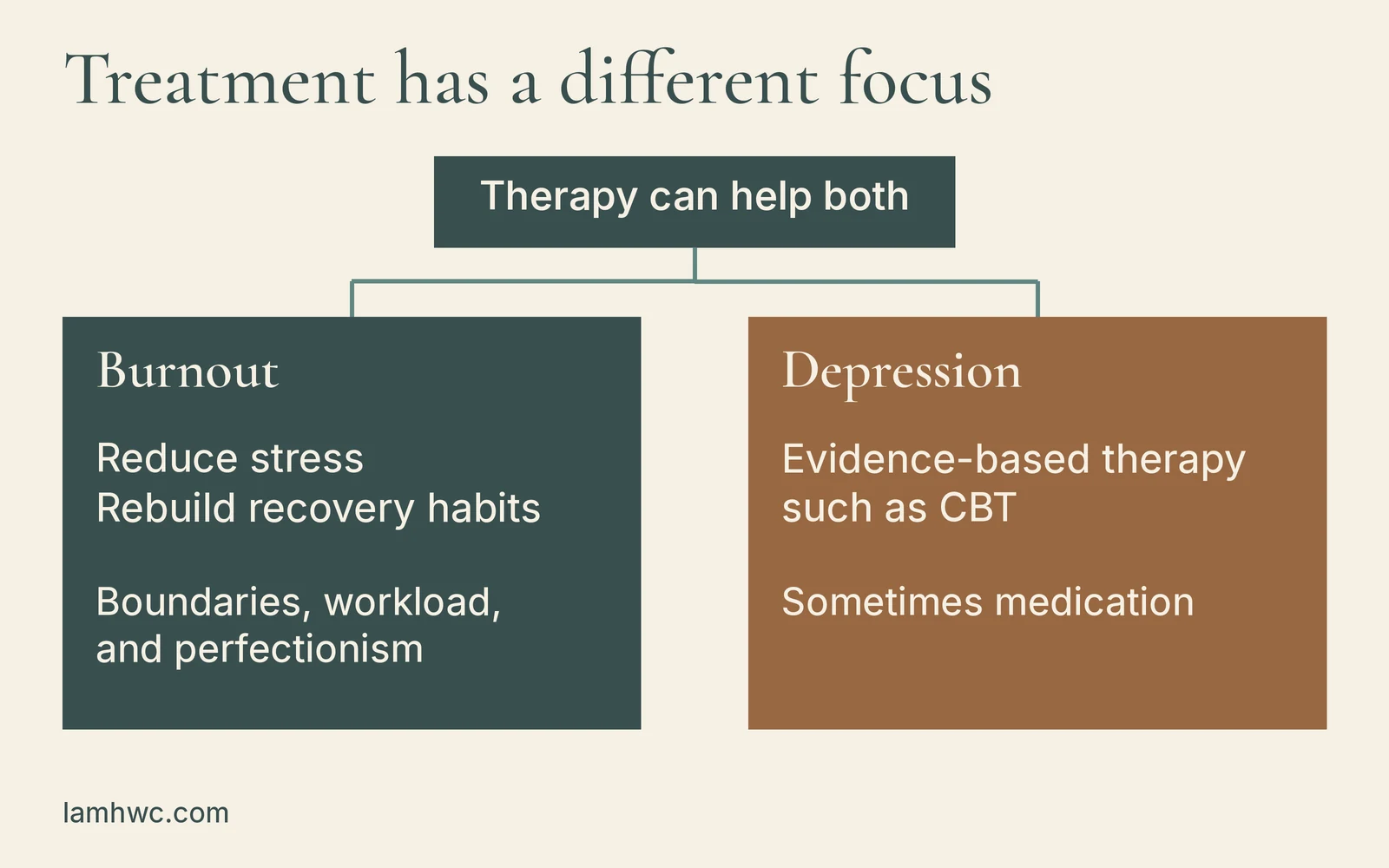
Burnout and depression are both treated effectively with therapy, though the focus differs.
How Is Burnout Treated?
Burnout is treated by reducing stress and rebuilding recovery habits. Therapy helps you set boundaries, manage workload, and challenge perfectionism. Mindfulness coaching for anxiety and stress teaches skills that lower the body’s stress response.
How Is Depression Treated?
Depression is treated with evidence-based therapy such as CBT, and sometimes medication. The difference between a psychiatrist and a therapist explains which provider fits each need.
When Should You Get Professional Help?
You should get professional help when symptoms last more than 2 weeks or start affecting your work, sleep, or relationships. 7 signs it is time to seek professional mental health help covers other red flags. If you ever have thoughts of harming yourself, call or text 988.
How Can Los Angeles Mental Health and Wellness Center Help?
Los Angeles Mental Health and Wellness Center offers individual counseling and mindfulness and wellness coaching in North Hollywood, with telehealth therapy for busy schedules. Contact our team or call (818) 273-6560.
Photo by Annie Spratt on Unsplash. Illustrative stock photograph; subjects are not identified as patients or as having the conditions discussed.