


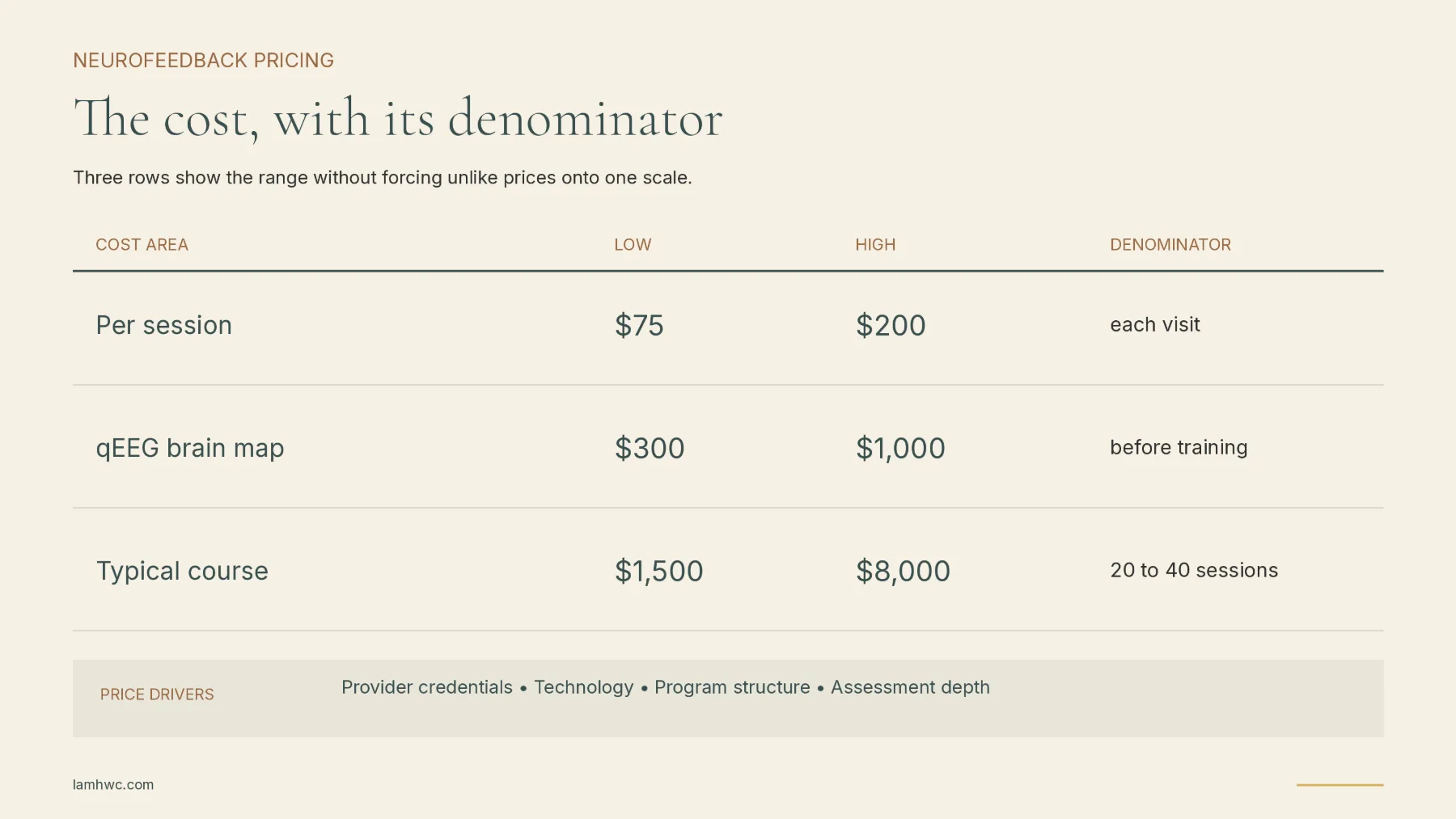
Neurofeedback costs $75 to $200 per session in Los Angeles, with a typical course of 20 to 40 sessions bringing the total to $1,500 to $8,000. The wide range comes down to 4 factors: provider credentials, technology, program structure, and whether a brain map is included.
What Are the 4 Factors That Set Neurofeedback Pricing?
Four factors explain nearly every price difference between providers:
Provider credentials: licensed clinicians charge more than technician-run franchises
Technology: 19-channel qEEG-guided systems cost more than 2-channel consumer setups
Program structure: integrated mental health programs price differently than standalone sessions
Assessment depth: a full qEEG brain map runs $300 to $1,000 before training begins
Cheapest is rarely best value here. Training the wrong brain pattern for 30 sessions costs more than mapping correctly once.
Why Does a Brain Map Come First?
A qEEG brain map comes first because it shows which brainwave patterns are dysregulated and where, turning neurofeedback from guesswork into a targeted protocol. The map compares your brain activity against normative databases and guides electrode placement for every session that follows.
We explain the full process in our guide to brain mapping and visualizing mental health, and pairing it with a neurocognitive evaluation gives the complete picture of brain function before training begins.
How Many Sessions Do You Actually Need?
Most conditions respond within 20 to 40 sessions, attended 2 to 3 times per week. Attention and sleep concerns often show movement by session 10, while anxiety and trauma-related patterns typically need the fuller course. Progress reviews every 10 sessions keep the plan honest and prevent paying for sessions past the point of benefit.
Does Insurance Cover Neurofeedback?
Insurance covers neurofeedback inconsistently, so treat coverage as a case-by-case verification rather than an assumption. Some plans reimburse it as biofeedback under specific codes, others cover the clinical services wrapped around it, and HSA and FSA funds apply in most cases. A benefits check before starting prevents surprise bills, and integrated programs often make the overall cost of care more workable, part of understanding levels of mental health care.
How Do You Compare Neurofeedback Providers on Value?
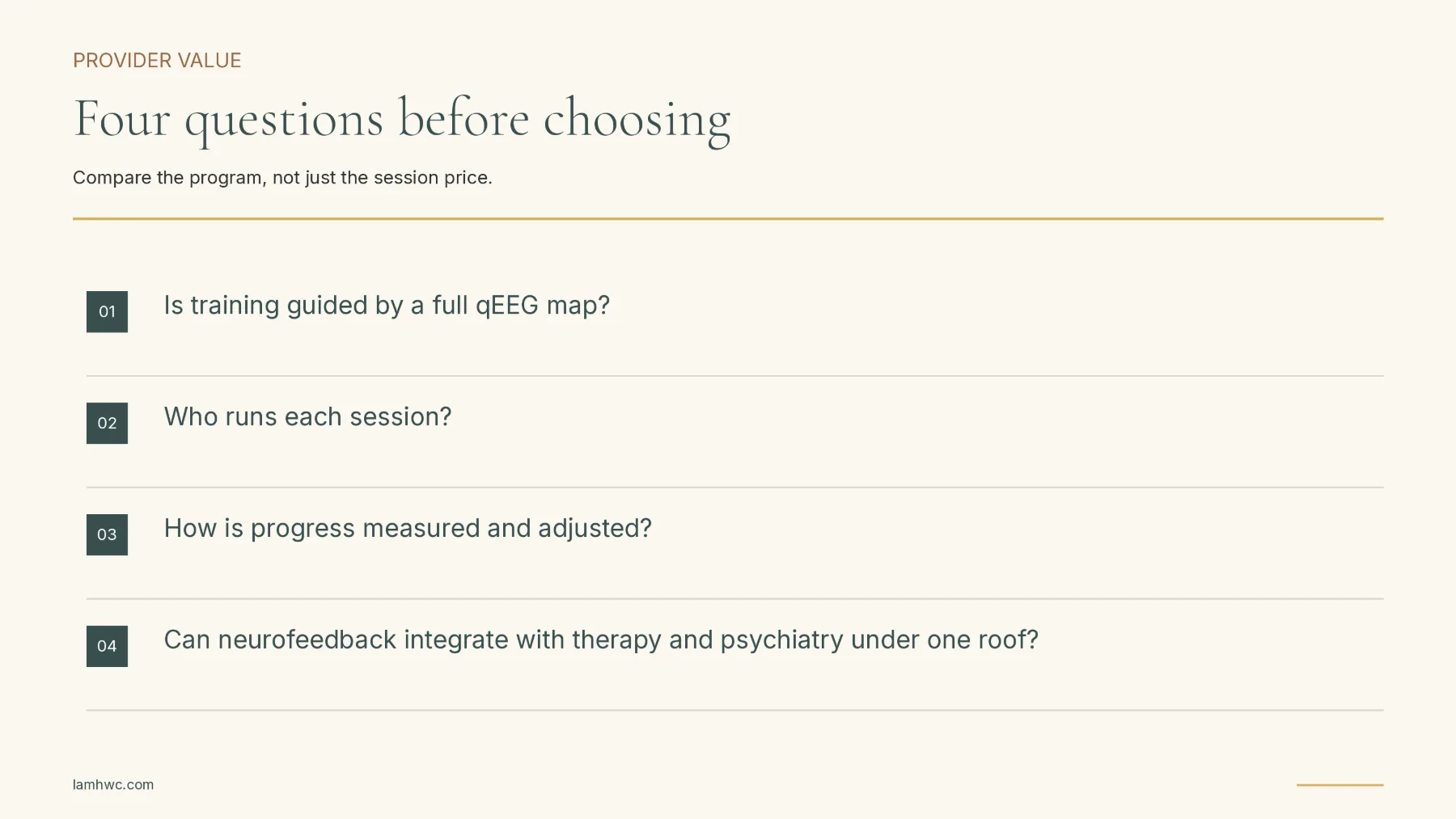
Compare providers on 4 questions rather than price alone:
Is training guided by a full qEEG map or a generic protocol
Who runs the sessions, a licensed clinician or a technician
How is progress measured, and how often is the protocol adjusted
Can neurofeedback integrate with therapy and psychiatry under 1 roof
The integration question separates programs from franchises. Brain training works best inside a coordinated treatment plan, not as an isolated subscription.
What Results Justify the Investment?
Reasonable expectations by session 20 include measurably improved sleep, steadier attention, and reduced baseline anxiety, confirmed by repeat mapping rather than impressions. Providers should be willing to show before-and-after data, and a program unwilling to re-map has no way to prove the training changed anything.
Does Insurance Ever Cover Neurofeedback?
Neurofeedback coverage remains inconsistent, and most patients pay out of pocket while a minority obtain partial reimbursement under biofeedback billing codes. Coverage odds improve when neurofeedback is delivered as part of a broader treatment plan documented by a licensed clinician.
Ask 2 questions of your insurer: whether biofeedback codes are covered under your behavioral health benefit, and whether an HSA or FSA can be applied. The second answer is yes far more often than the first.
How Many Sessions Do Most People Need?
Most neurofeedback protocols run 20 to 40 sessions, with initial changes often noted between sessions 10 and 20. Providers quoting dramatic results in under 10 sessions are describing an outcome the research does not support. Budget for the full protocol rather than a trial package, since partial courses rarely produce lasting change.
Related Questions About Brain-Based Treatment
What Does Neurofeedback Actually Train?
Neurofeedback rewards the brain in real time for shifting toward regulated patterns, and our overview of neurofeedback training your brain for balance walks through a session step by step.
How Does It Fit With Therapy?
Neurofeedback pairs well with talk therapy, since a regulated nervous system absorbs skills faster. Approaches like CBT for rewiring thought patterns and TMS therapy for depression target change at different levels of the same system.