


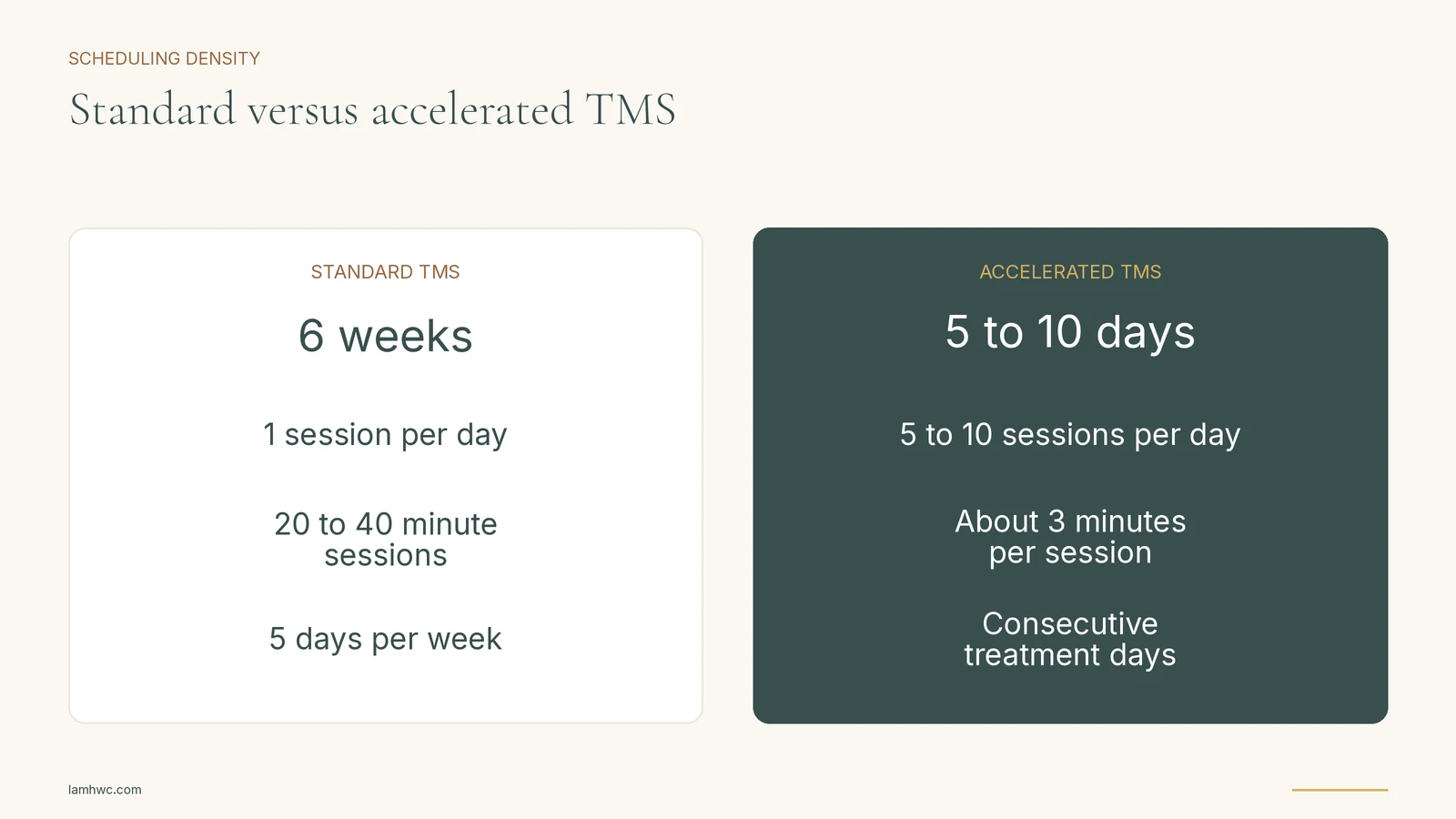
Accelerated TMS compresses a full course of transcranial magnetic stimulation into 1 to 2 weeks by delivering multiple sessions per day. Standard TMS runs 5 days a week for 6 weeks. Accelerated protocols deliver the same or greater total stimulation in a fraction of the calendar time.
How Does Accelerated TMS Differ From Standard TMS?
The difference is scheduling density, not the underlying technology. Both use magnetic pulses to stimulate targeted cortical regions.
- Standard TMS: 1 session per day, 5 days per week, across 6 weeks.
- Accelerated TMS: 5 to 10 sessions per day, across 5 to 10 consecutive days.
- Session length: standard sessions run 20 to 40 minutes, accelerated sessions often use 3-minute theta burst stimulation.
- Total pulses: accelerated protocols typically deliver more total pulses than a standard course.
What Is Theta Burst Stimulation?
Theta burst stimulation delivers pulses in short bursts patterned after natural brain rhythms, which shortens each session to roughly 3 minutes. That compression is what makes multiple daily sessions practical. Intermittent theta burst is the pattern used for depression treatment.
Why Are Sessions Spaced Throughout the Day?
Sessions are spaced roughly 50 to 60 minutes apart because the interval appears to matter for the brain changes the treatment is meant to produce. Stacking sessions back to back does not produce the same effect as spacing them.
Who Is Accelerated TMS Best Suited For?
Four groups benefit most from the compressed format.
- Patients who cannot commit to 6 weeks of daily appointments.
- Patients traveling from outside the immediate area for treatment.
- Patients with severe symptoms where a faster response is clinically important.
- Patients who have already completed standard TMS and want a different schedule.
Candidacy still requires the same screening as standard TMS, including a review of seizure risk, metal implants, and current medications.
What Does the Research Show?
Research on accelerated protocols has grown substantially, with the strongest published work coming from studies using neuroimaging-guided targeting and high session counts. Reported response rates in those trials have been notably higher than historical standard-protocol figures, though study sizes remain smaller and longer-term durability data is still accumulating.
What Should Patients Expect During a Treatment Week?
An accelerated week is a full-time commitment. Patients arrive in the morning and remain on site or nearby for most of the day, cycling between short sessions and 50-minute breaks. Common side effects match standard TMS and include scalp discomfort and headache during the first days.

Background on the standard protocol, including how it is used for depression, appears in our overview of TMS therapy for depression.
How Does It Fit Into a Treatment Plan for Resistant Depression?
Accelerated TMS is generally considered after medication trials have not produced adequate response. That clinical picture is defined in what is treatment-resistant depression, which outlines the criteria clinicians use.
Cost and insurance handling differ from standard TMS because the billing structure follows session count. See how much does TMS therapy cost for the current breakdown.
What Questions Should Patients Ask a Provider?
Five questions separate one accelerated program from another.
- Which protocol and pulse count does the course deliver?
- Is targeting based on anatomical landmarks or neuroimaging?
- How many sessions per day, and what is the interval between them?
- What does insurance authorization look like for this specific protocol?
- What maintenance options exist if symptoms return?
Providers should answer all 5 in writing before a patient blocks off a treatment week.
Frequently Asked Questions
Is accelerated TMS FDA cleared?
Theta burst stimulation is FDA cleared for depression treatment. Specific accelerated scheduling protocols vary by device and clinic, and patients should ask which protocol and device a provider uses.
Does accelerated TMS hurt more than standard TMS?
No. The sensation per session is comparable, described as tapping or pressure at the treatment site. Cumulative scalp tenderness can build across a dense week and typically eases after the first 2 days.
How long do results last?
Published follow-up periods have generally extended for months after treatment. Maintenance sessions are available for patients whose symptoms return, and durability is tracked at scheduled follow-up rather than assumed.
Can you work during an accelerated TMS week?
Most patients cannot maintain a normal work schedule during treatment days. Remote work during the 50-minute intervals is possible for some, but the week should be planned as a clinical commitment.