


Yes, TMS therapy is covered by most major insurance plans for treatment-resistant depression, including Medicare and the majority of commercial carriers. Coverage almost always requires documentation that 2 to 4 antidepressant trials did not bring adequate relief, and our team verifies these requirements for patients before treatment begins.
Which Insurance Plans Cover TMS in 2026?
Four categories of plans cover TMS for major depressive disorder: Medicare, most commercial PPO and HMO plans, many Medicaid managed care plans in California, and Tricare. Coverage expanded steadily after the FDA cleared TMS in 2008, and today the question is rarely whether a plan covers TMS, but what that plan requires first.
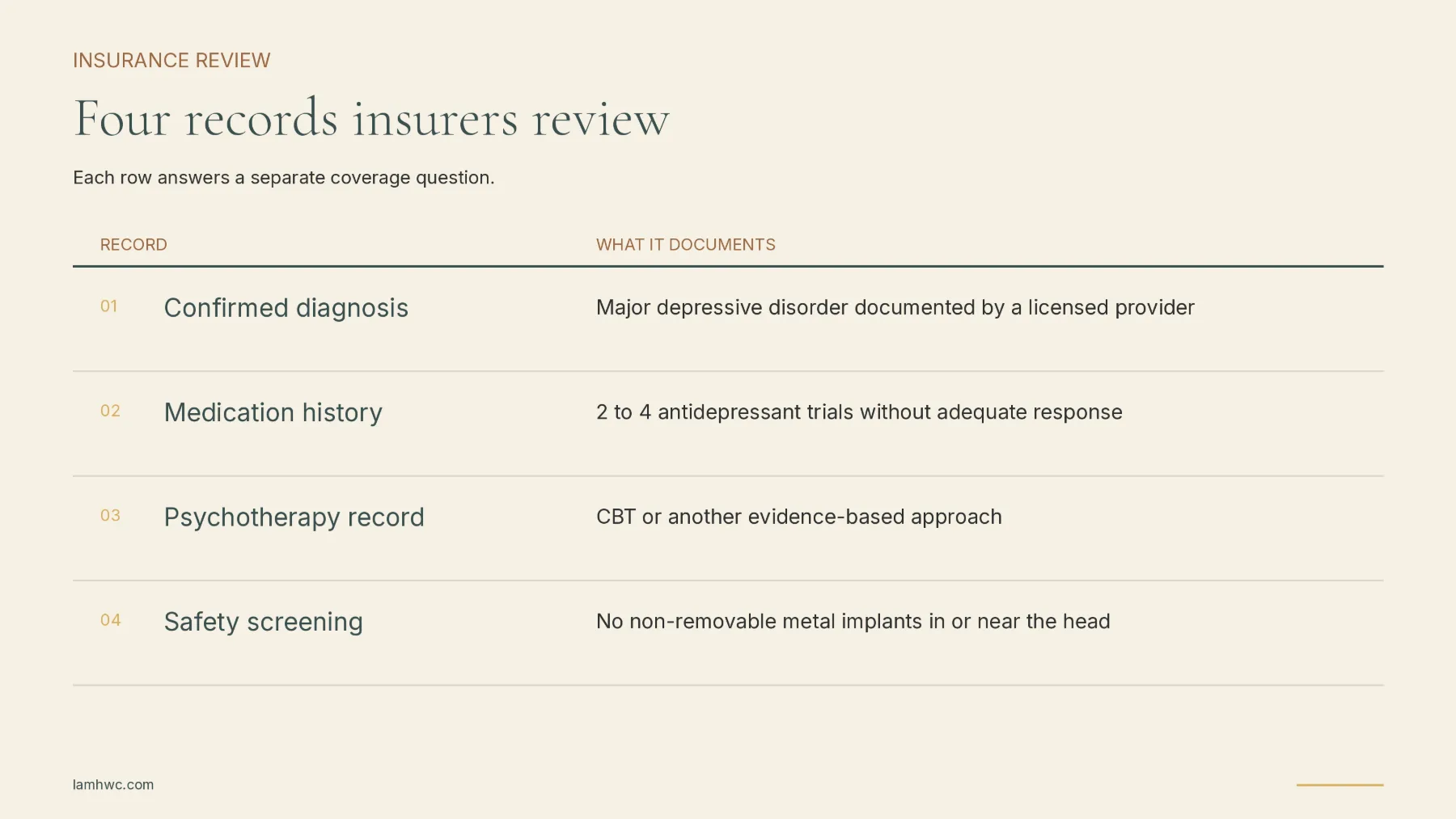
What Are the 4 Requirements Insurers Ask For?
Insurers typically require 4 things before authorizing TMS:
A confirmed diagnosis of major depressive disorder from a licensed provider
Documented trials of 2 to 4 antidepressant medications without adequate response
A record of psychotherapy, such as CBT or another evidence-based approach
No contraindications, like non-removable metal implants in or near the head
Meeting the criteria is a documentation exercise more than a clinical hurdle. Patients who have spent years cycling through medications usually qualify on paper already; the records just need to be gathered.
How Does Prior Authorization Actually Work?
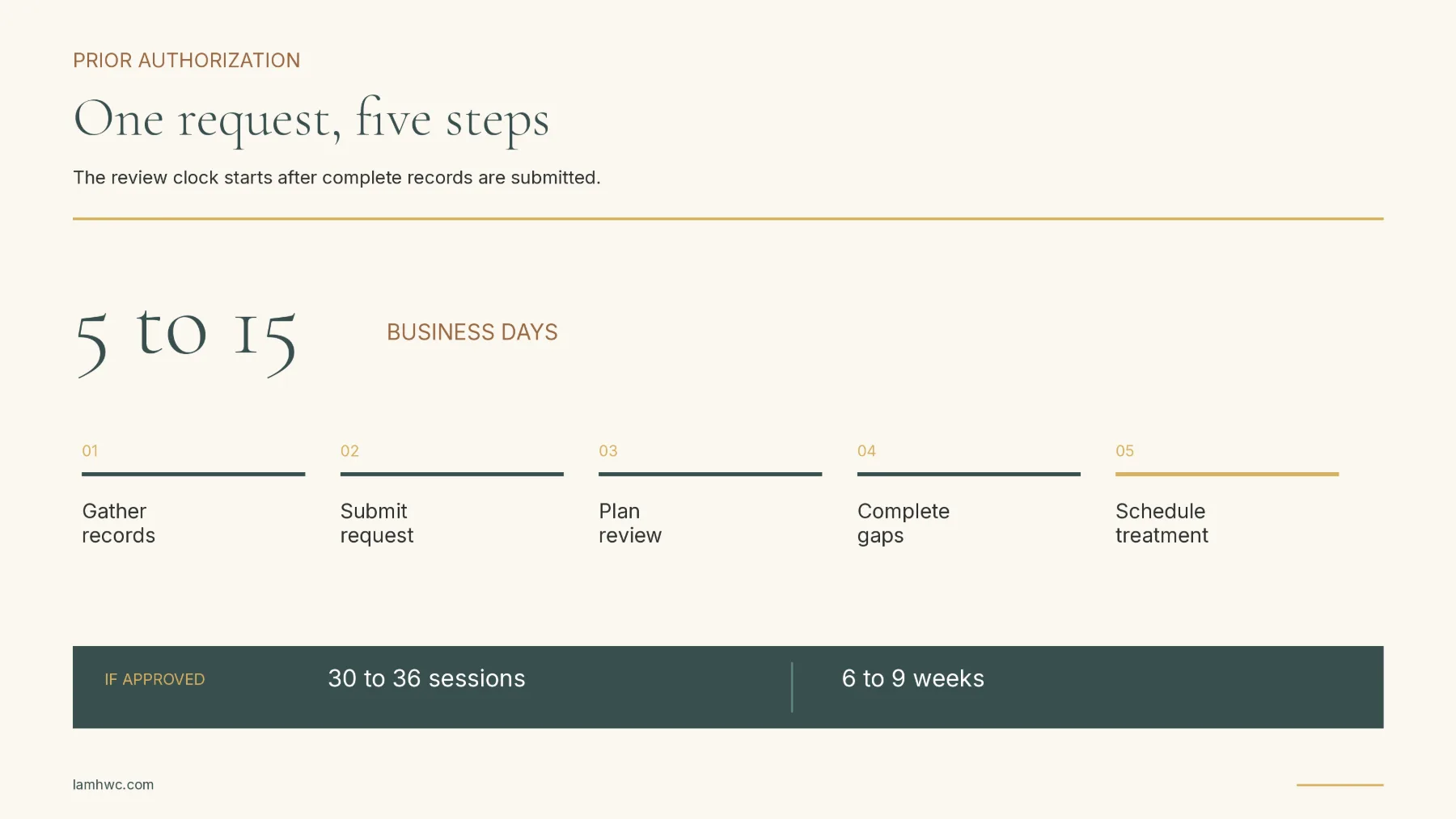
Prior authorization takes 5 to 15 business days once records are submitted. The treatment team compiles medication history, therapy notes, and symptom scores, then submits a request covering the standard course of 30 to 36 sessions over 6 to 9 weeks.
Denials happen, and 2 facts help: most denials cite missing documentation rather than medical judgment, and appeals succeed regularly when the record is completed. This is why we handle verification before a patient ever schedules, and it is part of knowing when you need more than weekly therapy.
What Does TMS Cost With and Without Coverage?
With insurance, patients pay their plan's copay or coinsurance per session, often $10 to $70. Without coverage, a full course runs $6,000 to $12,000 nationally. Given that gap, a 20-minute benefits check is the highest-value phone call in the entire process.
What Documents Should You Gather Before Calling Your Insurer?
Gather 4 documents before any coverage conversation:
A list of every antidepressant tried, with dates, doses, and outcomes
Names and dates of therapy providers, even for brief courses of treatment
Your current diagnosis from a treating provider
Your insurance card and the behavioral health phone number on its back
Pharmacy records fill most memory gaps, since pharmacies keep dispensing histories going back years. Patients rarely remember their full medication history, and that is normal.
What Should You Ask the Insurance Representative Directly?
Ask 3 questions on the verification call: is TMS a covered benefit under my plan, what are the prior authorization criteria, and what is my per-session cost after deductible. Write down the reference number for the call, because that number resolves disputes months later if a claim processes incorrectly.
What If Your Prior Authorization Is Denied?
A first denial is not the end of the process, and appeals succeed regularly when the missing element is documentation rather than eligibility. Denials usually cite 1 of 3 gaps: too few documented medication trials, missing therapy history, or an incomplete diagnostic record.
Ask for the denial reason in writing, then supply exactly what it names. Clinics that handle authorizations routinely manage this step for patients, which is worth asking about before you choose where to be treated.
How Much Do Patients Typically Pay Out of Pocket?
Covered patients commonly pay a specialist copay of $20 to $60 per session or coinsurance of 10% to 30% until the out-of-pocket maximum is reached. Because a full course runs 30 to 36 sessions, many patients hit their annual maximum partway through treatment, after which remaining sessions cost nothing. Ask your insurer to model the full course rather than a single visit.
Related Questions Patients Ask About TMS
What Is TMS and How Does It Help Depression?
TMS uses magnetic pulses to stimulate underactive mood circuits in the brain, without medication side effects. Our overview of TMS therapy as a new hope for depression explains the science and the session experience.
Are There Covered Alternatives if TMS Is Not a Fit?
Yes, insurers also cover trauma-focused CBT and EMDR therapy for anxiety, and a neurocognitive evaluation can clarify which path fits before you commit.