

Yes, TMS therapy works for anxiety in a growing body of research and in clinical practice, with the strongest evidence for anxiety that accompanies depression. The FDA cleared TMS for anxious depression in 2021, and studies report meaningful anxiety reduction in 50% to 60% of patients who complete a full course.
How Does TMS Target Anxiety in the Brain?
TMS targets anxiety by regulating overactive and underactive circuits in the prefrontal cortex that govern worry and threat response. Magnetic pulses delivered to precise scalp locations nudge those circuits back toward balanced firing over 6 to 9 weeks of sessions.
Protocol matters here. Anxious symptoms often respond to right-sided, lower-frequency stimulation, while depression protocols stimulate the left side at higher frequency, and clinics treating anxious depression frequently combine both in 1 session.
What Results Do Patients Actually Report?
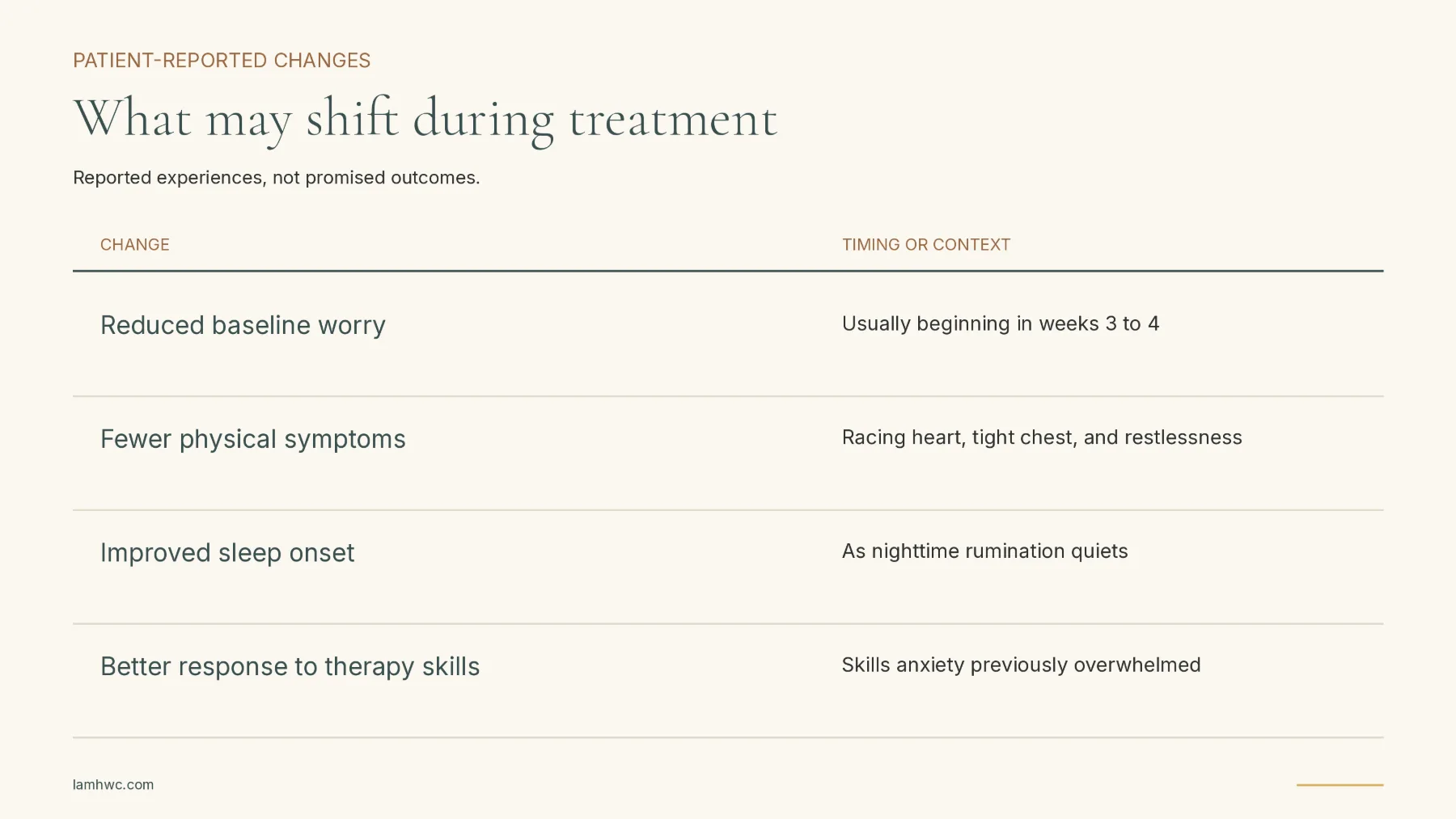
Patients report 4 common changes across a course of treatment:
Reduced baseline worry, usually beginning in weeks 3 to 4
Fewer physical symptoms like racing heart, tight chest, and restlessness
Improved sleep onset as nighttime rumination quiets
Better response to therapy skills that anxiety previously overwhelmed
That last point is the pattern clinicians emphasize most. When the nervous system calms, skills from CBT and mindfulness coaching for anxiety and stress finally get traction.
Who Is a Good Candidate for TMS for Anxiety?
Good candidates are adults whose anxiety persists after 2 or more medication trials, especially when depression is also present. TMS is non-invasive, requires no anesthesia, and lets patients drive themselves home after each 20-to-40-minute session.
Candidacy is a clinical decision, not a checklist. A thorough intake, sometimes including brain mapping, identifies whether TMS, therapy intensification, or both fit the picture.
How Does TMS Compare With Other Anxiety Treatments?
TMS complements rather than replaces first-line anxiety treatments. Therapy remains foundational, medications help a majority of patients, and TMS occupies the treatment-resistant lane, the point covered in our guide to levels of mental health care in Los Angeles for when standard care is not enough.
What Does a Course of TMS for Anxiety Actually Involve?
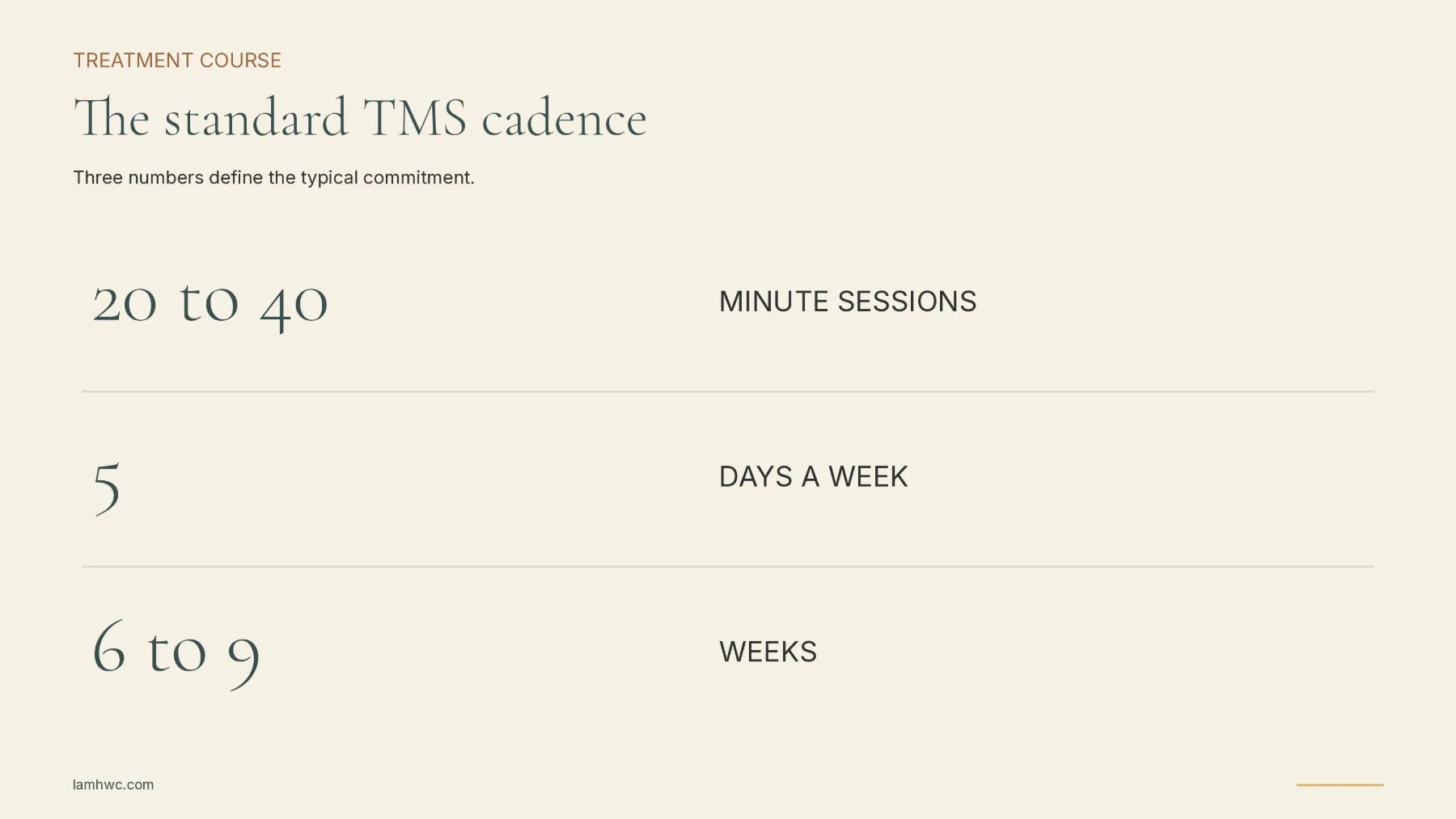
A course involves 5 sessions per week for 6 to 9 weeks, each lasting 20 to 40 minutes in a comfortable chair, fully awake. There is no sedation, no memory effect, and no downtime, and the most common side effects are mild scalp discomfort and a headache that fades within the first week of treatment.
Consistency drives outcomes more than any other patient-controlled factor. The protocol builds effects cumulatively, so treating sessions like appointments that can slide tends to slow the response.
How Do Clinicians Measure Whether It Is Working?
Clinicians measure progress with standardized symptom scales administered every 1 to 2 weeks, tracking worry, sleep, and physical tension scores against baseline. Objective tracking matters because improvement often shows in the numbers 1 to 2 weeks before patients subjectively feel it, and that early signal helps people stay the course through the middle weeks.
Who Is a Good Candidate for TMS With Anxiety Symptoms?
Good candidates share 4 characteristics:
Depression or anxiety symptoms that persisted through at least 2 medication trials
Difficulty tolerating medication side effects
No implanted metal devices near the head
No seizure history or other contraindication identified at screening
Screening takes 1 appointment and answers the question definitively. Patients often assume they are ineligible for reasons that turn out not to apply.
How Does TMS Compare to Medication for Anxiety Symptoms?
TMS avoids the systemic side effects that lead many patients to stop medication: weight change, sexual side effects, and emotional blunting. The tradeoff is a time commitment of daily visits for 6 to 9 weeks. Many patients continue medication during TMS rather than choosing between them, and that combined approach is common in practice.
Related Anxiety Treatment Questions
What About Trauma-Driven Anxiety?
Anxiety rooted in trauma often responds best to trauma-specific care, and EMDR therapy for anxiety addresses the underlying memories rather than the symptoms alone.
Is TMS for Anxiety Covered by Insurance?
Coverage for anxious depression follows the depression criteria, so most plans authorize it after documented medication trials. Our overview of TMS therapy for depression explains the full clinical pathway.